For most of the last two decades, SEO for small businesses followed a reliable formula. Research the right keywords, publish quality content, earn some backlinks, keep your website technically healthy, and Google would send you traffic. It was not always easy, but it was at least predictable.
That formula is being disrupted. Not broken entirely, but changed enough that small businesses still playing by the old rules are watching their organic traffic decline while being unsure why. The answer, in almost every case, comes back to the same thing: AI search.
Google’s AI Overviews, Perplexity, ChatGPT Search, and a growing list of AI-powered discovery tools are changing how people find information, how they find businesses, and how much of that journey ever involves clicking through to a website at all. At Web Technality, we help small businesses navigate this shift every day. This guide tells you what is actually happening, what it means for your visibility, and exactly what to do about it right now.
A BrightEdge study from early 2026 found that Google AI Overviews now appear in over 58% of all search queries. For informational searches, that number exceeds 74%. If your content strategy was built for the old search model, a significant portion of your potential visibility has already shifted.
What AI Search Actually Changed
To understand how to respond, you first need to understand exactly what changed and why it matters differently for small businesses than it does for large corporations.
Traditional search showed users a list of ten blue links and let them choose where to click. The search engine’s job was to rank. The user’s job was to evaluate and decide. Traffic flowed to the websites that ranked best.
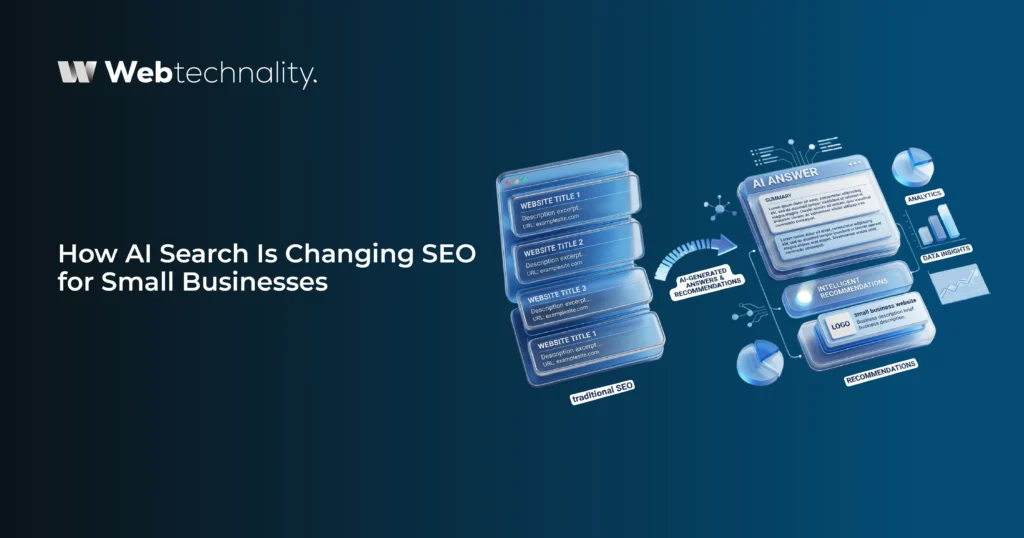
AI search changes the model at a fundamental level. Instead of presenting links, AI search engines now generate a direct answer synthesized from multiple sources. The user gets the information without necessarily needing to visit a website. Google calls its version AI Overviews. Perplexity calls its version an Answer. ChatGPT Search calls it a response. The branding varies, but the behavior is the same: the AI answers first, and links come second.
For small businesses, this creates two simultaneous realities. First, traditional click-through traffic on generic informational queries is declining. Second, businesses whose content is cited by AI as a trusted source gain a new kind of visibility that did not exist before. The challenge is that most small businesses are only experiencing the first reality and missing out on the second entirely.
According to a 2026 SparkToro analysis, organic click-through rates on informational queries have declined by an average of 34% since Google AI Overviews became mainstream. However, commercial intent queries where users are ready to act show a much smaller decline of approximately 11%, with local searches holding CTR levels almost unchanged.
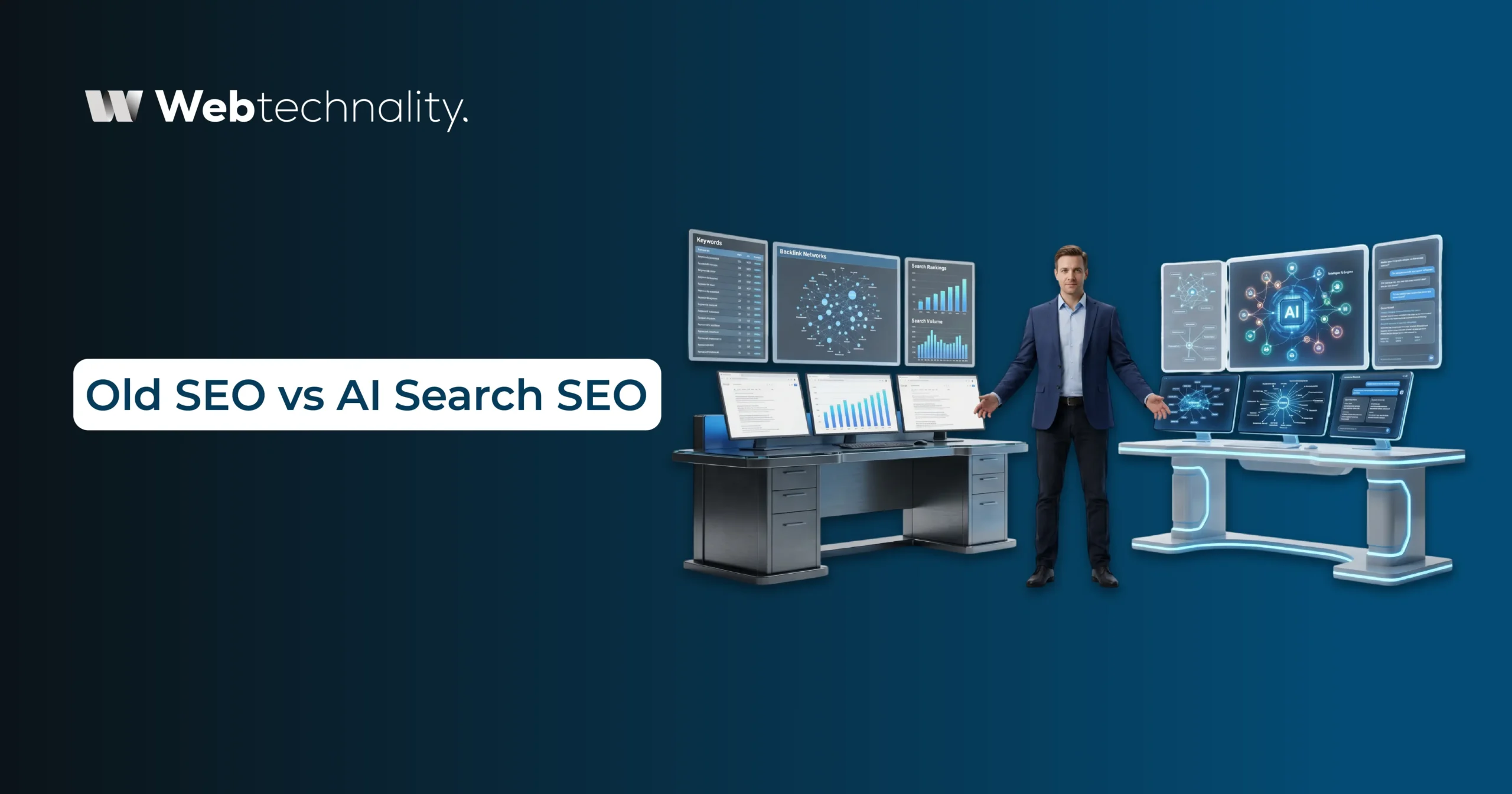
Old SEO vs AI Search SEO: Side by Side
The shift is not about abandoning everything you know. It is about understanding precisely where the playbook has changed and where it has stayed the same.
| Factor | Traditional SEO (2020–2024) | AI Search SEO (2025–2026) |
|---|---|---|
| Primary goal | Rank in top 10 blue link results | Be cited inside AI-generated answers |
| Content format | Keyword-dense, long-form articles | Authoritative, fact-rich, clearly structured answers |
| Traffic model | Ranking = clicks = traffic | Citation = brand visibility, clicks = intent-driven only |
| Local search | Google Maps + organic results | AI local packs + GBP data + citation in AI answers |
| Schema markup | Helpful for rich snippets | Critical for AI comprehension and citation |
| Backlinks | Domain authority signal | Trustworthiness signal for AI citation eligibility |
| E-E-A-T signals | Important for YMYL topics | Essential across all content categories |
| Content depth | Longer tends to rank better | Accuracy and specificity matter more than length |
The core shift: traditional SEO was about earning a position in a ranked list. AI search SEO is about earning the trust of an AI system that decides what information to surface in a synthesized answer. The audience is different. The optimization target is different. But the foundation of genuine quality content and technical health remains the same.
The Real Threats AI Search Creates for Small Businesses
Let us be direct about the challenges before we talk about the opportunities. Small businesses face specific vulnerabilities in the AI search era that larger brands with bigger budgets can absorb more easily.
📉 Declining Informational Traffic
If your blog was driving traffic through how-to guides, explainer posts, and general industry information, that traffic is declining. AI Overviews are absorbing the answers to those queries directly in the search results. If your content strategy was primarily informational, you are likely already feeling this in your analytics.
🏢 Brand Authority Gaps
AI search engines heavily favor established, authoritative sources when generating answers. A large brand with hundreds of backlinks and years of content history starts with a structural advantage in AI citation. Small businesses without a deliberate authority-building strategy are routinely overlooked even when their content is genuinely excellent.
🌐 Zero-Click Searches on the Rise
When a potential customer searches “what to look for in a web design agency,” AI answers that question directly. If your website was previously getting discovery traffic from those early-stage research queries, that traffic channel is shrinking. The user got their answer without your website being involved at all.
🔧 Technical Debt Becomes More Costly
AI search systems crawl and interpret your website the same way traditional search crawlers do, only with higher standards for structured data. A website with technical issues, missing schema, or unstructured content that used to rank adequately will now struggle even more to be cited or surfaced.
The Opportunities Most Small Businesses Are Missing
The narrative around AI search tends to focus almost entirely on threats. But for small businesses that adapt quickly, AI search also creates genuine advantages that were not available under the old model.
🎯 Local Search Has Never Been More Powerful
AI search engines consistently pull from verified local business data when answering location-specific queries. A fully optimized Google Business Profile, consistent NAP data across the web, and genuine customer reviews are now direct inputs into AI-generated local answers. For service businesses and brick-and-mortar operations, this is a significant opportunity to appear in AI-driven local results without competing against national brands in organic rankings.
🧠 Niche Expertise Is Rewarded Like Never Before
AI search systems are sophisticated enough to identify genuine subject matter experts. A small business that consistently publishes specific, accurate, experience-based content on a narrow topic can outperform a large generic brand in AI citations for that niche. If you are a specialist, your depth is now your structural advantage.
📌 Featured in AI Answers Means Brand Exposure Without a Click
Being cited in an AI Overview or Perplexity answer still puts your brand name in front of a user, even if they do not click through. For small businesses working to build recognition in their local market or industry, this is a new kind of brand impression that did not exist before 2024.
Businesses that appeared in Google AI Overviews at least once in Q1 2026 saw an average 19% increase in branded search volume over the following 60 days, even when their direct click-through traffic declined. Brand recall from AI citation is a real and measurable phenomenon.
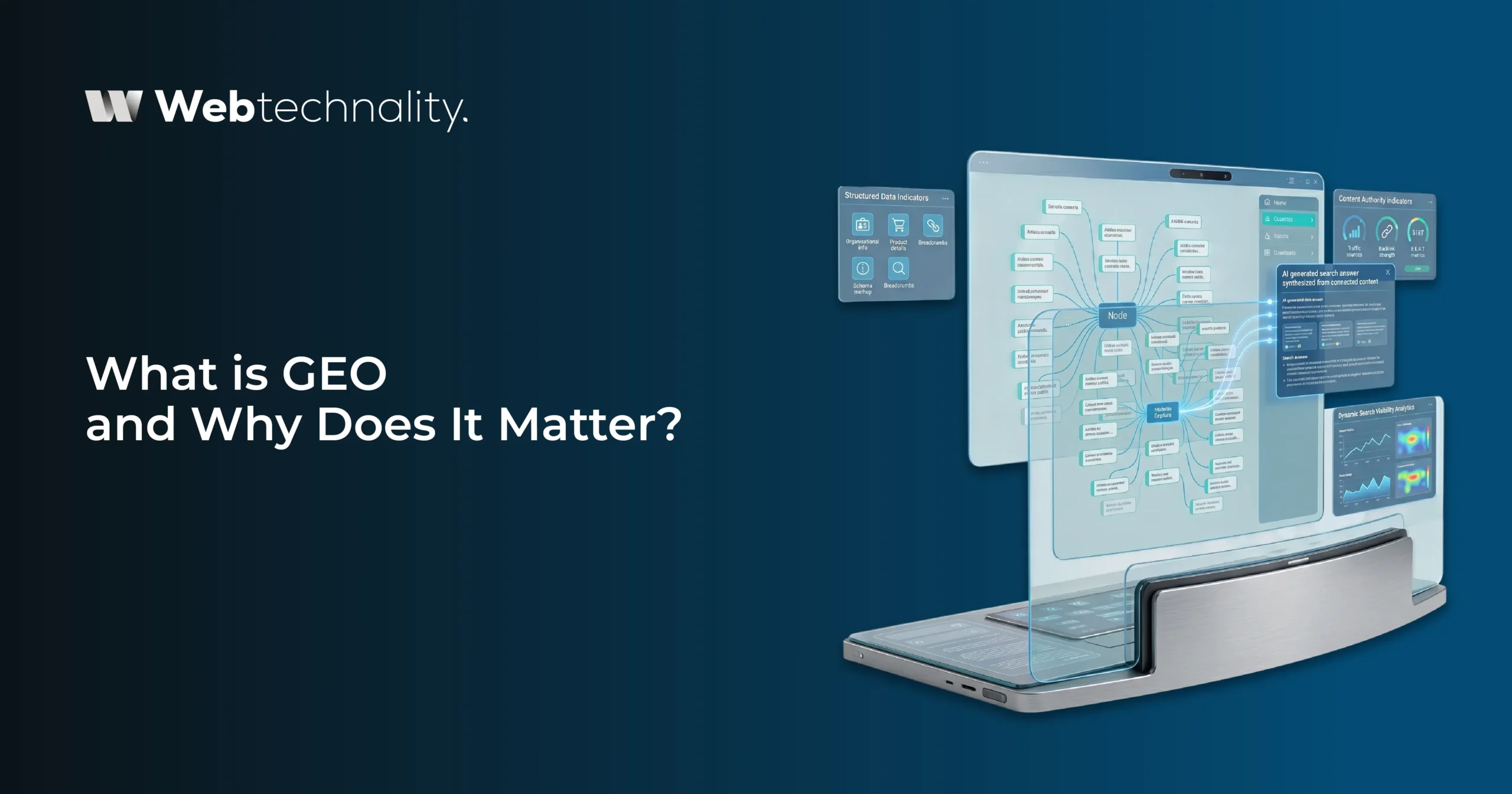
What is GEO and Why Does It Matter?
Generative Engine Optimization, or GEO, is the emerging discipline of optimizing your content to be cited by AI-powered search engines. Think of it as SEO’s next evolution: instead of optimizing for a ranking algorithm, you are optimizing for a reasoning model that evaluates your content’s trustworthiness, specificity, and authority before deciding whether to include it in a generated answer.
The principles of GEO that matter most for small businesses in 2026 are straightforward in concept but require deliberate execution:
- Cite your claims: AI models favor content that references data, research, and sources. Adding statistics with attributions to your content signals credibility.
- Write in direct answer format: Content that answers questions clearly at the beginning of each section is more likely to be extracted and cited than content that buries answers in narrative paragraphs.
- Demonstrate first-hand experience: AI models are increasingly able to detect whether content was written from genuine experience or assembled generically. Real examples, case studies, and specific observations perform better.
- Use structured headings consistently: AI systems navigate content through your heading structure. Clear, descriptive H2s and H3s make your content significantly more extractable.
- Build topical authority, not just individual posts: Publishing a cluster of related, interconnected content on your core topics signals domain expertise to AI systems more effectively than isolated blog posts.
Your 8-Step AI Search SEO Action Plan
Here is the practical roadmap we walk small business clients through at Webtechnality when updating their SEO strategy for the AI search era.
1. Audit Your Current Traffic by Query Type
Open Google Search Console and segment your traffic by query intent: informational, navigational, and commercial. Identify which categories are declining and which are holding steady. This tells you exactly where AI search is eating into your visibility and where you still have strong ground to defend.
2. Complete and Optimize Your Google Business Profile
For local businesses, this is the single highest-leverage action available right now. Ensure every field is completed, photos are current, services are listed in detail, and you are responding to every review. AI search engines treat GBP data as a primary source for local query responses.
3. Add Full Schema Markup to Your Core Pages
LocalBusiness, Service, FAQPage, Review, and BreadcrumbList schema give AI search engines the structured data they need to understand and cite your content. Our SEO team at Webtechnality implements schema comprehensively across every client site as a baseline requirement.
4. Restructure Blog Content for Direct Answer Format
Go through your top traffic pages and rewrite the opening paragraph of each section to deliver a direct, clear answer before elaborating. This mirrors the format AI systems look for when extracting content for generated answers.
5. Build an FAQ Strategy on Every Core Page
Add a structured FAQ section to every service page and key blog post, using the exact questions your customers ask. Format them as genuine questions and concise answers with the FAQPage schema applied. This gives AI systems pre-packaged, well-structured content to cite directly.
6. Earn Authoritative Local Citations
Consistent listings in relevant directories, local chamber of commerce sites, industry associations, and local news sources build the authority signals AI search uses to evaluate small business credibility. Audit and clean up any inconsistent NAP data across your listings.
7. Publish Experience-Based Content Consistently
First-hand case studies, client results, project walkthroughs, and opinion pieces based on your professional experience are exactly the kind of content AI systems struggle to find elsewhere and are therefore more likely to cite. A monthly content calendar built around your real expertise will outperform a content factory producing generic AI-generated articles.
8. Track AI Search Visibility Separately
Set up monitoring for when your brand appears in AI Overviews, Perplexity answers, and ChatGPT Search results. Tools like BrightEdge, Semrush, and emerging AI visibility trackers make this measurable. You cannot optimize what you cannot see.
Frequently Asked Questions
What is AI search, and how is it different from traditional search?
AI search uses large language models to synthesize a direct answer in the search results page rather than just listing links. Tools like Google AI Overviews, Perplexity, and ChatGPT Search generate summarized responses that often reduce the need for users to click through to individual websites.
Does AI search hurt small business SEO?
It can reduce organic click-through rates for generic informational queries, but businesses with strong local signals, specific expertise, and properly structured content often see increased visibility in AI-generated answers. The key is adapting your content strategy to the new format rather than continuing with tactics that were built for the old model.
What is Generative Engine Optimization (GEO)?
GEO is the practice of optimizing your content to be cited and referenced by AI search engines like Perplexity, ChatGPT Search, and Google AI Overviews. It involves writing authoritative, well-structured, factual content that AI models can confidently pull from when generating answers to user queries.
How important is Google Business Profile for AI search?
Extremely important. AI search engines heavily reference structured business data, including Google Business Profile information, when generating local and business-specific answers. A fully completed, regularly updated GBP is one of the highest-leverage actions a small business can take in 2026.
Do I still need traditional SEO in 2026?
Yes. Traditional SEO fundamentals, including technical health, quality content, backlinks, and schema markup remain essential. AI search is built on top of the same indexed web, so strong traditional SEO forms the foundation of strong AI search visibility. GEO builds on top of traditional SEO rather than replacing it.
How do I know if AI search is affecting my traffic?
Check Google Search Console for impressions versus clicks. A deep impression count with a declining click-through rate often indicates AI Overviews are absorbing your traffic. Tracking branded versus non-branded query performance separately also reveals the extent of AI search impact on your specific business.
Can Webtechnality help my small business adapt to AI search?
Yes. Webtechnality provides SEO services specifically designed for the AI search era, including content restructuring, schema markup implementation, GBP optimization, and GEO strategy tailored to your industry and target audience.
The Bottom Line
AI search is not the death of SEO for small businesses. It is a recalibration. The businesses that treated SEO as a technical game of keyword stuffing and link accumulation were always going to struggle as search intelligence improved. The businesses that invested in genuine expertise, authentic content, and technical clarity are the ones that AI systems are now rewarding.
For small businesses, the path forward is clear: optimize for trust, structure your content for machines as well as humans, own your local signals completely, and build the kind of specific authority that a large generic brand simply cannot replicate.
Your Next Steps:
- Check your Search Console data today: Look for declining CTR on previously stable queries
- Audit your Google Business Profile: Treat it as your most important SEO asset for 2026
- Add FAQ sections to your top 5 pages: With FAQPage schema applied
- Rewrite your top blog posts in direct answer format with clear headings
- Talk to an SEO partner about a GEO strategy built for your specific market
About Webtechnality
Webtechnality is a full-service digital agency in Kingman, Arizona, specializing in SEO, AI development, web design, and digital marketing. With 10+ years of experience and 5,000+ projects delivered, we help small and mid-sized businesses stay visible, competitive, and growing in an increasingly AI-driven search landscape.