In the healthcare world, protecting patient data is more important than ever. If your website handles sensitive health information, whether you’re a healthcare provider, insurance company, or running a telemedicine platform, you need to make sure it’s HIPAA-compliant. This isn’t just about following rules; it’s about keeping your patients’ information safe and building trust.
At Web Technality, we help healthcare businesses build secure, high-performing, and HIPAA-compliant websites that protect patient data while delivering a smooth user experience. Whether you need a healthcare portal, patient management system, or telemedicine website, investing in compliance is essential for long-term success.
Having a HIPAA-compliant website means you’re taking steps to protect patient privacy, avoid hefty fines, and provide a seamless, secure online experience for your users. But how exactly do you make sure your site is compliant?
In this article, we’ll dive into the essential features every HIPAA-compliant website must include. These features not only keep you compliant but also ensure that your website is safe and trustworthy for your patients. If you are searching for a reliable web development agency in Arizona for healthcare websites, this guide will help you understand the most important compliance requirements.
What is HIPAA Compliance?
HIPAA compliance ensures that healthcare organizations protect patient information, including electronic health records (EHRs) and personal health information (PHI). It sets standards for the security and privacy of health data and applies to healthcare providers, insurers, and any entity that deals with PHI.
For websites, HIPAA compliance involves ensuring that sensitive data is encrypted, access is restricted, and all user interactions with PHI are secure. Websites must also make it clear how patient information is used and shared.
Healthcare businesses often work with a professional web development agency in Arizona to ensure their websites meet all HIPAA standards while maintaining a user-friendly design and fast performance.
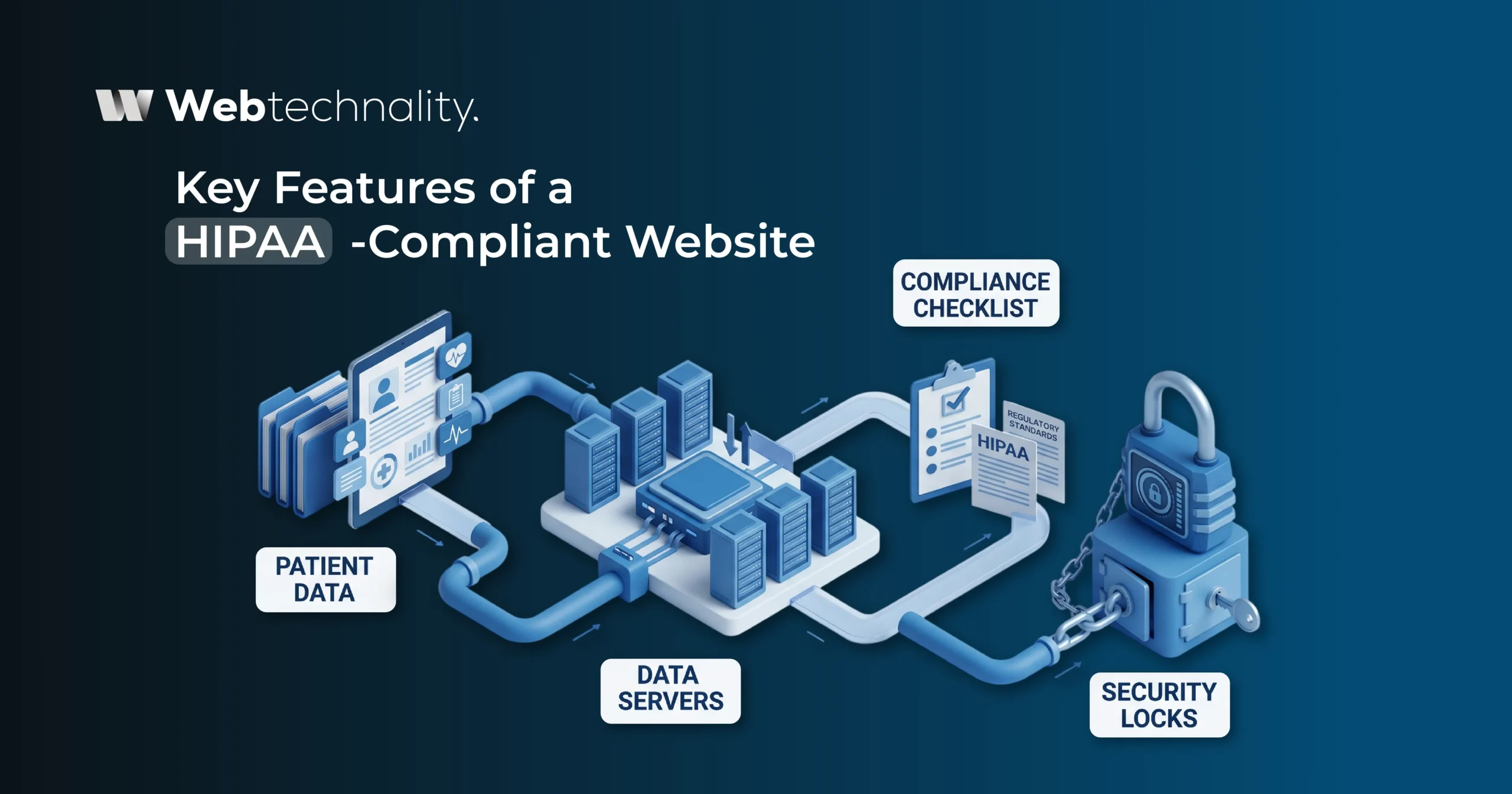
Key Features of a HIPAA-Compliant Website
1. Encrypted Communication Channels (SSL Certificates)
The most important feature for a HIPAA-compliant website is encryption. Encryption ensures that any information sent between the website and the user is secure and cannot be intercepted by unauthorized parties. This is done through an SSL certificate, which turns your website from HTTP to HTTPS.
Why It Matters:
Encryption protects PHI from hackers, ensuring that data remains confidential and secure during transmission.
How to Implement:
- Always use HTTPS for all pages.
- Ensure your SSL certificate is up-to-date and renewed regularly.
At Web Technality, we recommend advanced SSL security implementation for every healthcare website to ensure complete data protection.
2. Access Controls and User Authentication
To keep sensitive data safe, it’s essential to have strict access controls on your website. Only authorized users should be able to access PHI. Additionally, you must implement user authentication, such as multi-factor authentication (MFA), to verify the identity of users before granting access to confidential data.
Why It Matters:
Limiting access helps prevent unauthorized access to patient data, reducing the risk of data breaches.
How to Implement:
- Use role-based access to restrict access to PHI.
- Implement multi-factor authentication (MFA) for users logging into the website.
A trusted web development agency in Arizona can help configure advanced authentication systems that improve both security and user experience.
3. Data Backup and Disaster Recovery Plans
A HIPAA-compliant website must have a reliable backup and recovery plan. This ensures that patient data is not lost due to technical failures or other unforeseen issues. In case of a data loss event, a disaster recovery plan helps restore the data as quickly as possible.
Why It Matters:
Data loss can lead to serious disruptions in healthcare services and potential HIPAA violations. Having a backup ensures that data can be recovered without compromising patient privacy.
How to Implement:
- Set up automated daily backups of all sensitive data.
- Create a disaster recovery plan to restore data in case of an emergency.
At Web Technality, we provide secure backup and recovery solutions tailored for healthcare websites and medical portals.
4. Audit Logs and Activity Tracking
Maintaining audit logs is crucial for HIPAA compliance. These logs track every activity related to PHI on the website, helping to identify and respond to potential security threats. They also provide transparency and accountability, which is essential during audits.
Why It Matters:
Audit logs help monitor the use of PHI and detect any unauthorized access or suspicious activities.
How to Implement:
- Implement activity tracking systems to record user actions involving PHI.
- Regularly review audit logs to ensure compliance and security.
Healthcare organizations working with a professional web development agency in Arizona often prioritize real-time monitoring systems to maintain compliance standards.
5. Privacy Policies and Consent Forms
HIPAA-compliant websites must have clear privacy policies that outline how patient data is collected, used, and shared. Patients should also be asked to provide explicit consent before their data is collected. These forms must be transparent and easy to understand.
Why It Matters:
Privacy policies and consent forms ensure that patients are fully aware of how their data will be used, promoting trust and compliance with HIPAA.
How to Implement:
- Include a privacy policy that explains how PHI is handled.
- Use consent forms to obtain patient permission before collecting any sensitive data.
6. Secure Payment Processing (for Healthcare Services)
For healthcare websites that handle payments, ensuring secure transactions is crucial. Any financial information related to healthcare services, such as insurance payments or co-pays, should be processed using a PCI-DSS compliant payment gateway to prevent unauthorized access.
Why It Matters:
HIPAA compliance extends to all sensitive information, including financial data. Ensuring secure payments protects patients’ financial privacy.
How to Implement:
- Use secure payment gateways that comply with PCI-DSS standards.
- Avoid storing sensitive payment information on the website; use third-party payment processors instead.
At Web Technality, we integrate secure payment solutions for healthcare businesses to ensure safe and reliable online transactions.
7. Clear Communication on Data Usage
It’s vital that your website clearly communicates how patient data is used. Patients should know whether their data will be shared with third parties and for what purpose. Consent must be given for any sharing or use beyond the intended scope.
Why It Matters:
Clear communication builds trust with your users and ensures compliance with HIPAA by providing full transparency about data usage.
How to Implement:
- Update your privacy policy regularly to include any changes in how patient data is shared.
- Use opt-in consent forms to get explicit permission from patients for any data sharing.
Benefits of HIPAA Compliance for Websites
| Benefit | How It Helps |
|---|---|
| Protects Patient Privacy | Ensures sensitive patient data is kept confidential. |
| Avoids Legal Penalties | Helps prevent costly fines and lawsuits for non-compliance. |
| Builds Trust | Patients are more likely to trust a website that prioritizes their privacy. |
| Enhances Reputation | Being HIPAA-compliant shows your commitment to security and privacy. |
| Ensures Business Continuity | Backup and recovery plans ensure your website is always operational, even during disruptions. |
Healthcare providers looking for a reliable web development agency in Arizona often choose agencies experienced in HIPAA-compliant web development to strengthen patient trust and online security.
Conclusion
Ensuring that your website is HIPAA-compliant is not just a legal obligation, it’s a necessary step to protect patient data, build trust, and safeguard your reputation in the healthcare industry. By integrating encryption, secure access controls, audit logs, and clear privacy policies, you can ensure that your website meets the rigorous standards of HIPAA compliance.
Investing in HIPAA-compliant features is a proactive measure that helps you avoid legal trouble and enhance the security and privacy of your patients’ sensitive information. In turn, this will help you build long-term relationships with your users while ensuring your website operates within the legal framework that governs healthcare data.
If you’re in the process of building or updating your healthcare website, be sure to prioritize these features for HIPAA compliance to ensure security and privacy for all involved.
For businesses searching for a dependable web development agency in Arizona, Web Technality offers professional healthcare website development services focused on security, performance, and HIPAA compliance.
HIPAA compliance is important because it protects sensitive patient data, reduces the risk of cyberattacks, prevents legal penalties, and helps healthcare organizations build trust with patients.
Any website that collects, stores, transmits, or processes patient health information should follow HIPAA compliance standards. This includes telemedicine websites, hospitals, clinics, healthcare portals, and medical billing systems.
SSL encryption secures the connection between the user and the website by converting data into encrypted code. This prevents hackers from intercepting sensitive patient information during transmission.
A HIPAA-compliant website should include:
SSL encryption (HTTPS)
Multi-factor authentication (MFA)
Secure hosting
Role-based access controls
Audit logs and monitoring
Automated backups
Privacy policies and consent forms
Yes, a professional web development agency in Arizona like Web Technality can develop secure and HIPAA-compliant healthcare websites with advanced security features, encrypted communication, and protected patient portals.